Wraparound Recovery Spaces | Inside Recovery Campus
Recovery Doesn’t Only Happen in Treatment
The groups, therapy sessions, and clinical work matter. But recovery is built in all the hours around them.
Recovery Campus gives participants places to keep practicing, learning, connecting, reflecting, resting, exploring, and building a life that begins to feel different from the one they came in with.
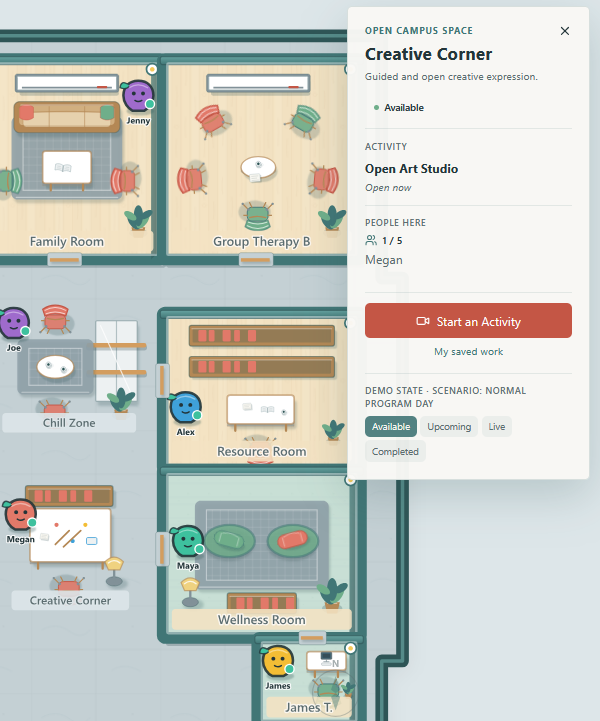
The Library. Recovery Corner. Creative Corner. Chill Zone. Peer spaces. Games. Resources. Quiet places.
They are not “extra content.” They are the connective tissue of the program.
They give participants somewhere to go when they are not in group — and something recovery-centered to do when treatment is not actively happening.
From “I attend treatment a few hours, a few days a week” to “I have a recovery environment I can keep returning to.”
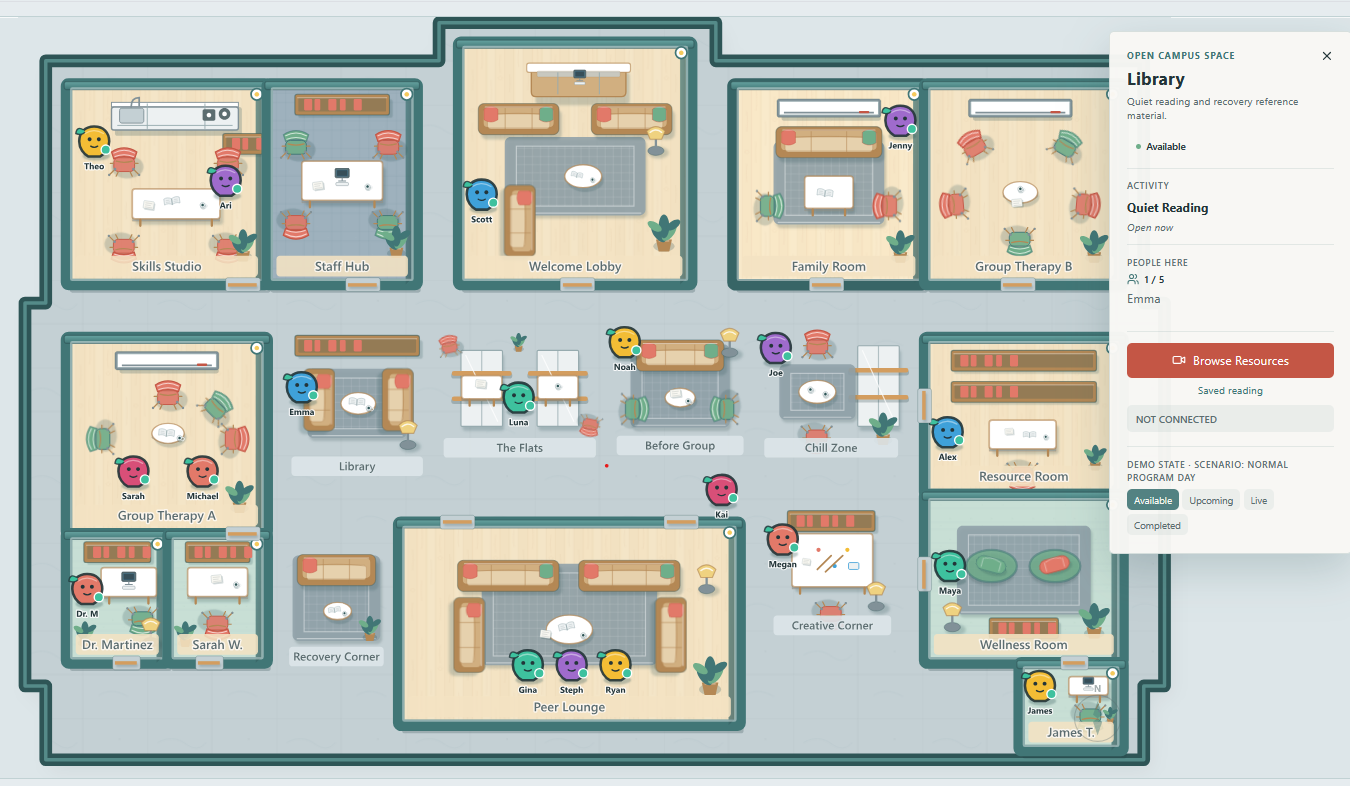
The Wraparound Layer of Recovery Campus
A traditional virtual program can become very appointment-driven. Log in. Attend group. Log out. Then the program disappears until the next scheduled session.
Recovery Campus fills that space. Participants can return throughout the day to read something relevant, complete a recovery action, work on a personal goal, reset for five minutes, spend time with peers, play, create, reflect, or simply stay connected to the recovery environment.
The Campus gives the rest of the treatment day somewhere to live.
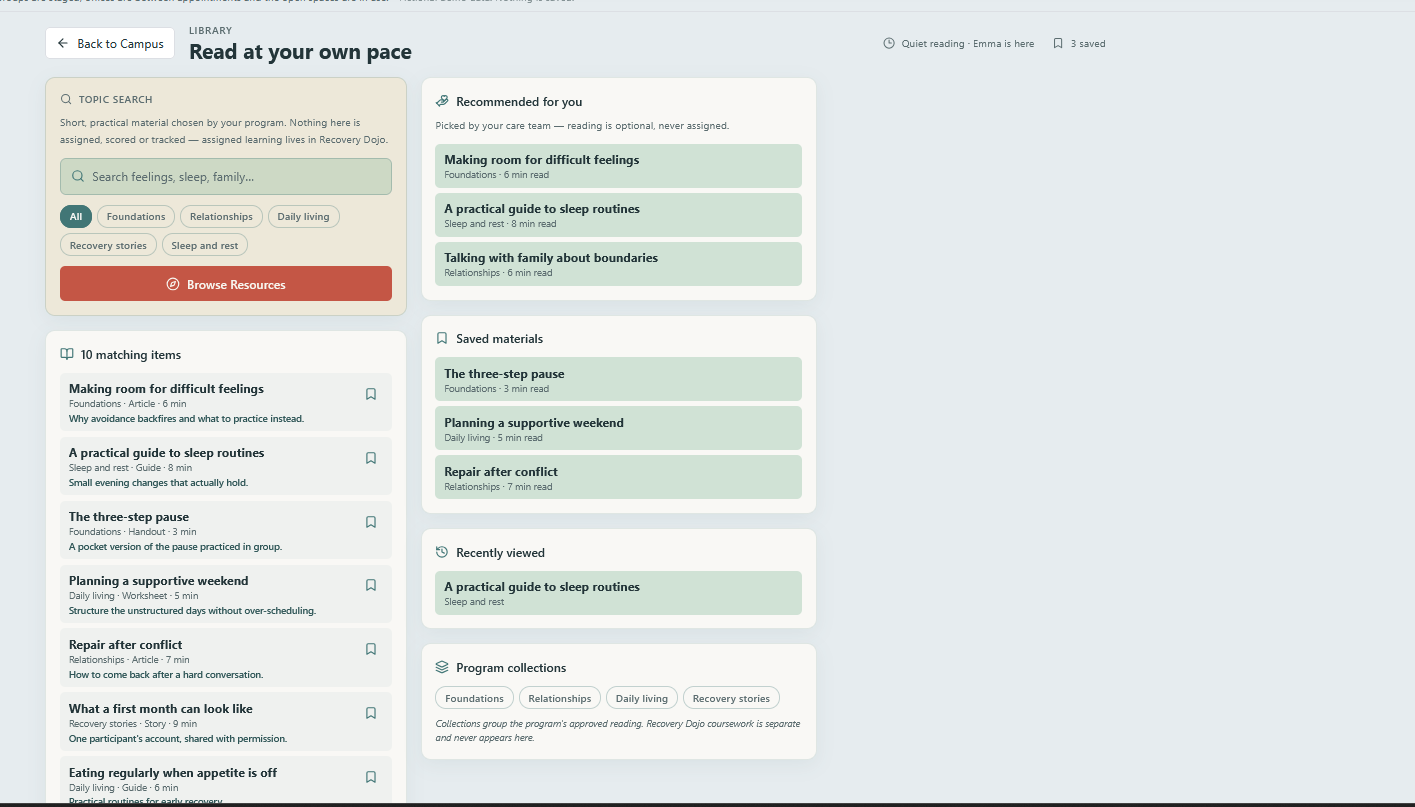
Library — Learn Without Being Assigned
Not everything a participant needs should become homework. The Library gives people a quiet place to explore recovery material at their own pace — relationships, sleep, difficult feelings, daily living, recovery stories, and other practical topics.
Content can be recommended by the care team, saved for later, or discovered by the participant. Search topics, explore program-curated collections, and return to recently viewed material.
Recovery Dojo is structured learning. The Library is curiosity, reflection, and self-directed growth.
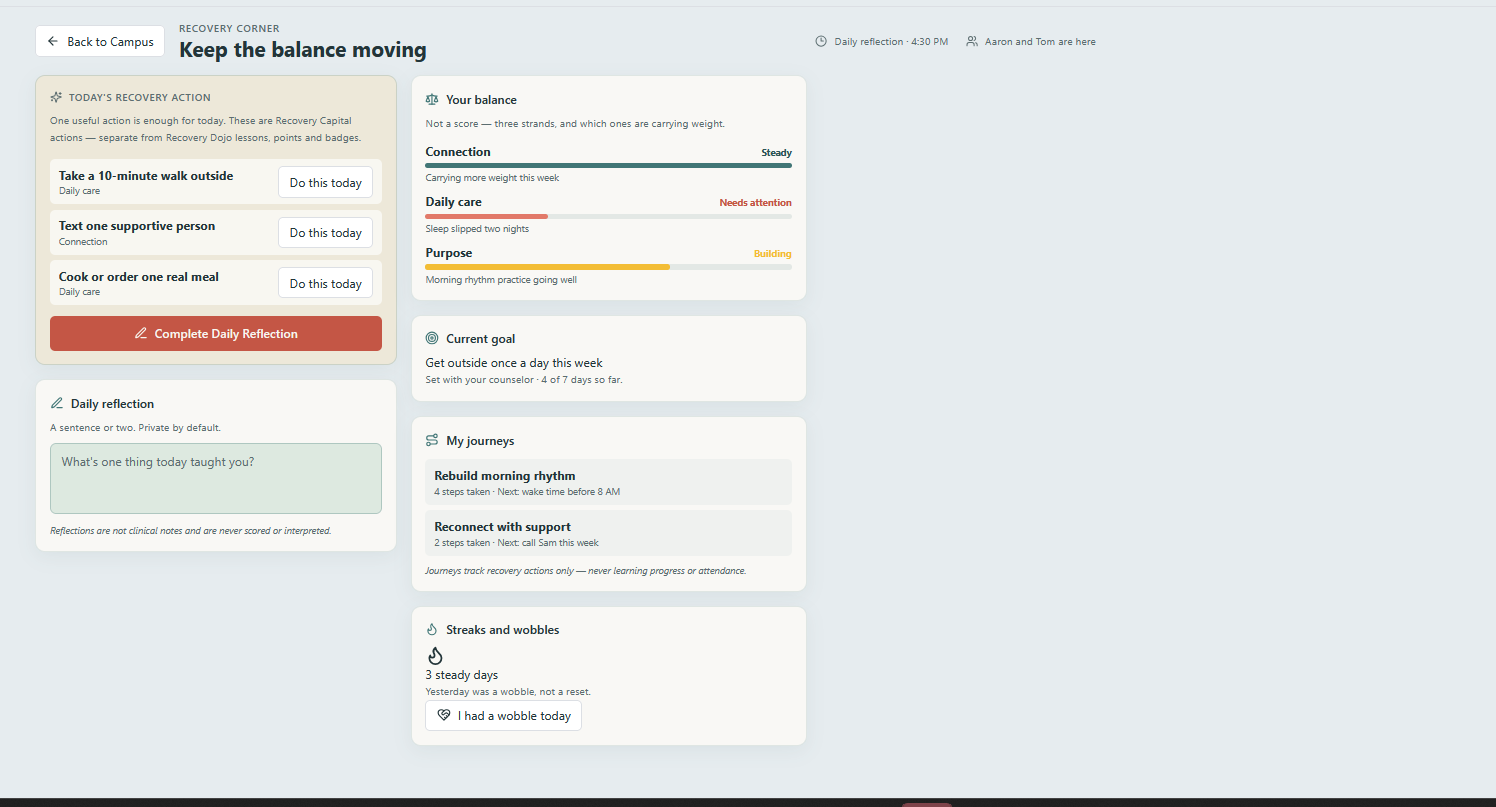
Recovery Corner — Turn Recovery Into Daily Life
Recovery is ultimately lived outside the therapy room. Recovery Corner makes that practical through small daily recovery-capital actions: reaching out to someone supportive, getting outside, eating a real meal, rebuilding routines, strengthening connection, and working toward personal goals.
Participants can reflect privately, follow personal recovery journeys, notice steady days, and acknowledge a wobble without treating it as failure. Progress is about taking action, not earning a clinical score.
The goal is not another score. It is helping people practice living differently. Recovery is not merely abstaining from something. It is building something.
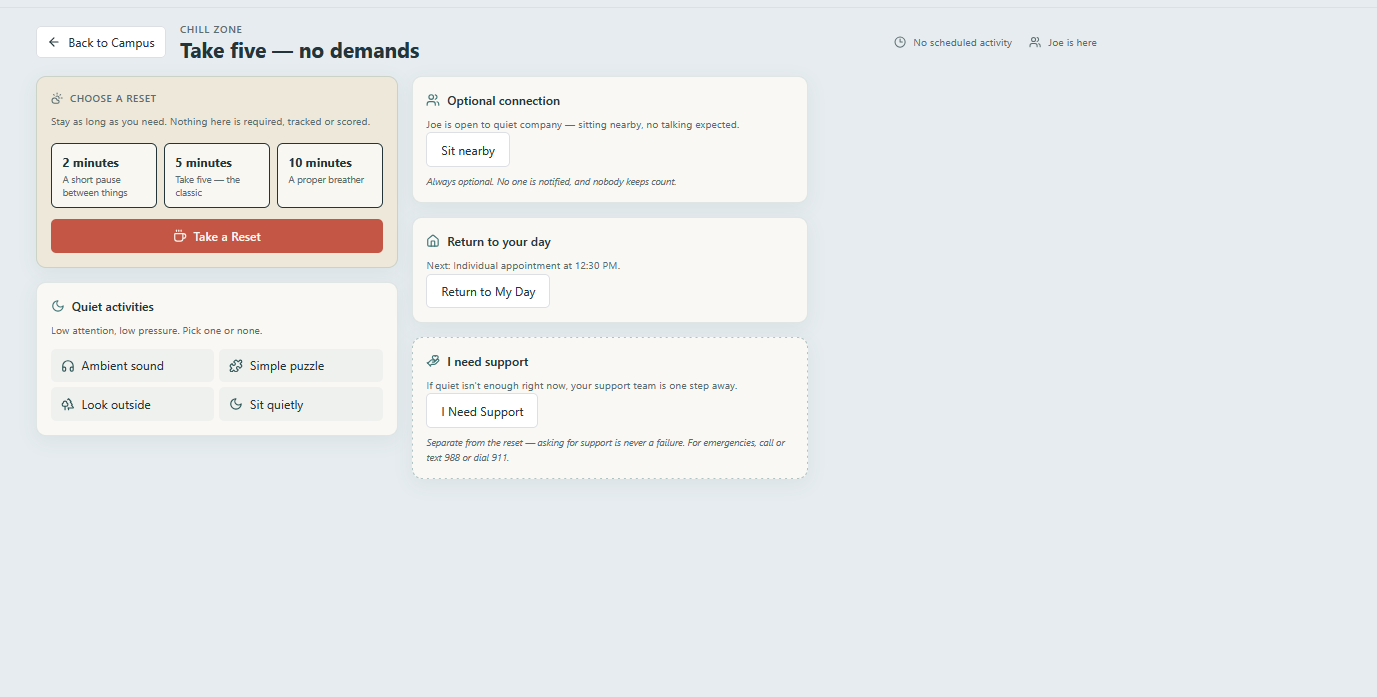
Chill Zone — A Place Where Nothing Is Required
Treatment can be demanding. Sometimes the next right thing is not another lesson, assignment, or group. Sometimes it is five quiet minutes.
Chill Zone gives participants permission to reset without having to perform: a two-, five-, or ten-minute break; ambient sound; something simple; sitting quietly; or optional low-pressure company. Nothing is required, tracked, or scored.
And if quiet is not enough, support is one step away. A real treatment environment needs places for effort — and places for exhale.
Creative Corner — Recovery Needs More Than Clinical Work
People rebuilding their lives need room for curiosity, play, expression, and enjoyment too. Creative Corner makes space for games, informal creative experiences, and activities that are enjoyable without becoming therapy assignments.
What do I like? What do I do with my time? What makes me feel alive? Who am I becoming? Rediscovering answers is part of building a recovery-first life.
Peer Spaces — Connection Beyond the Session
A recovery environment also includes other people. Peer spaces give participants opportunities to spend time together and connect with recovery coaches, peer support specialists, and fellow participants outside scheduled clinical treatment.
More Than the Hours on the Schedule
The clinical rooms are where formal treatment happens. The rest of the Campus is where participants begin to live inside recovery.
Together these spaces support continuity between sessions, recovery-oriented routine, self-directed exploration, connection, rest, play, reflection, daily recovery actions, new habits, new interests, and belonging.
This is not a claim that every optional activity is therapy, clinical documentation, or a billable service. It is an intentionally designed recovery environment that supports the hours around formal care.
For the People Running the Program
Clinical leaders and therapists
Give participants practical ways to carry treatment themes into everyday life: self-directed materials, recovery actions, daily goals, and options to decompress after an emotionally demanding group. Support a broader recovery milieu without turning every interaction into a clinical task.
Care coordinators and peer staff
Offer concrete between-session activities around sleep, routine, purpose, connection, and daily living. Meet participants where they are: reading, resetting, reconnecting, building habits, or seeking support.
Program operators and founders
Build a virtual facility that remains meaningful after scheduled encounters. Give participants multiple reasons to return voluntarily, while keeping optional, low-demand experiences distinct from required treatment.
Questions programs ask
Frequently Asked Questions
Does this replace group therapy or clinical care?
No. The wraparound spaces complement clinical treatment. They are the places where participants can explore, practice, rest, connect, and build routines outside scheduled sessions.
Is the Library the same as Recovery Dojo or assigned coursework?
No. The Library supports optional, self-directed reading and program-recommended materials. Recovery Dojo is the separate structured-learning experience.
Are rest, reflection, or informal activities scored?
The illustrated Chill Zone and private reflection experiences are explicitly low-pressure and unscored. These spaces should not be described as automated clinical assessments.
What about connection with peers?
Peer Lounge is the dedicated informal peer community, with text/chat, peers and recovery coaches, and its own feature page. This umbrella page links to it without duplicating it.
Wraparound Recovery Spaces | Inside Recovery Campus
Treatment May Only Occupy a Few Hours of the Week. Recovery Has to Fill the Rest of It.
Recovery Campus doesn’t end when group ends. The wraparound spaces give participants somewhere to keep learning, connecting, practicing, resting, creating, and building the routines of a recovery-first life.